
Introduction
Russian research stations in the Arctic region face extreme challenges in providing healthcare services, including dental care. With temperatures plummeting to -50°C and complete isolation during winter months, conventional dental equipment and approaches were unsuitable for these harsh conditions. A specialized portable dental solution was required to ensure researchers’ oral health during extended polar missions where medical evacuation is impossible for up to eight months during winter isolation.
Challenges
The Arctic environment presented multiple unique challenges that required innovative engineering solutions. Extreme temperatures could cause conventional equipment failure, with plastics becoming brittle and batteries losing capacity rapidly in cold conditions. Limited power availability restricted equipment to low-power solutions, as generators provided only intermittent electricity with strict rationing during winter months. Complete isolation during winter meant no possibility of evacuation or resupply for 6-8 months, requiring equipment to function without technical support or replacement parts. Additionally, space constraints in research stations severely limited the available area for medical equipment, with most stations allocating less than 6 square meters for medical purposes. These constraints demanded solutions that were robust, compact, energy-efficient, and capable of functioning without external support for extended periods.
Solution: Arctic-Adapted Dental System
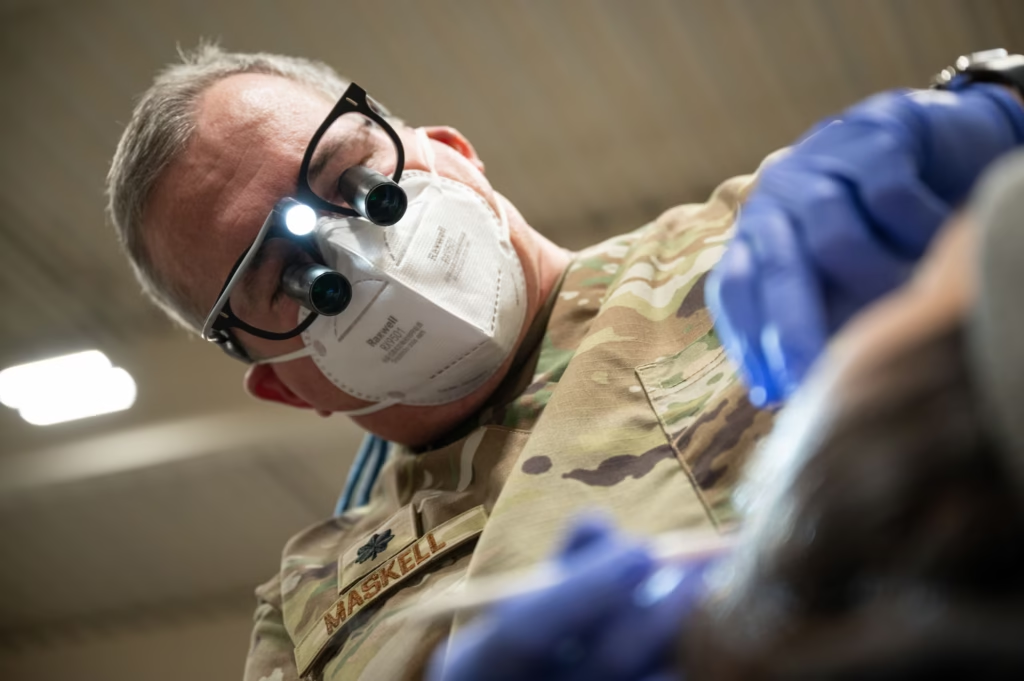
The engineered solution comprised a comprehensive Arctic-adapted dental system designed specifically for extreme environments. The core treatment unit featured a portable dental drill with cold-resistant lubricants and battery operation capable of functioning at -30°C, LED headlights with rechargeable batteries that maintained 80% capacity at -20°C, and basic hand instruments made from cold-resistant steel that wouldn’t become brittle in extreme cold. The emergency dental materials included reinforced temporary filling materials that could set at low temperatures as low as -10°C, cold-stable dental anesthetics with extended shelf life validated for Arctic conditions, and antibiotic kits for dental infections with detailed protocols for remote use. The communication and support system incorporated satellite communication modules for tele-dentistry consultations, digital camera attachments for image transmission to mainland specialists, and comprehensive decision-support software adapted for use by non-dental personnel in emergency situations.
Implementation Process
The development and deployment followed a rigorous process informed by polar medicine specialists. Requirements analysis involved consulting with veteran polar researchers and reviewing five years of medical evacuation records to identify the most common dental emergencies requiring intervention. Prototype testing subjected equipment to simulated Arctic conditions including temperature cycling between -50°C and +20°C, vibration tests simulating snow vehicle transport, and functionality verification after extended storage at -30°C. Training programs were conducted for station medical officers covering emergency procedures and tele-dentistry protocols, with emphasis on differential diagnosis and determining when intervention was necessary versus when conservative management was appropriate. Continuous support established scheduled tele-dentistry consultations and emergency support channels available 24/7 via satellite connection, with guaranteed response time under two hours for emergency consultations.
Results and Impact
The dental system proved highly effective in field conditions during two years of deployment across six Russian Arctic stations. The system successfully managed 94% of dental emergencies on-site, eliminating the need for dangerous emergency evacuations that previously cost approximately $125,000 per evacuation and disrupted research programs. Researchers reported 100% satisfaction with dental support in annual surveys, specifically noting increased confidence in undertaking winter assignments knowing dental support was available. Dental emergencies requiring evacuation reduced from 3-4 per winter to zero in the first year of implementation, with no evacuations for dental reasons reported since system deployment. The system also demonstrated interoperability with other polar station medical equipment and became integrated with the telemedicine systems of the Russian Arctic Research Institute. Station medical officers reported high confidence in using the system after training, with all indicating they could successfully manage common dental emergencies using the protocols and remote specialist support.
Conclusion
The portable Arctic dental solution has become an essential component of polar research station medical support, ensuring researcher safety and mission continuity in one of Earth’s most challenging environments. The success of this project has led to its adoption as standard equipment for all Russian winter-over stations and has attracted interest from other nations with polar research programs. The principles developed—robustness, simplicity, remote support integration, and specialized training for non-specialists—provide a template for medical support in other extreme environments where specialist care is unavailable. The project demonstrates how appropriately designed medical systems can enable human presence in the most remote and hostile environments on Earth.