Introduction
A Māori community in New Zealand exhibited low utilization rates of local dental services, not due to a lack of access, but because of cultural disconnect and a historical legacy of mistrust in Western medical institutions. A Dental Core Solution Company collaborated with Māori elders (Kaumātua) and health workers (Kaimahi) to co-design a dental service that respected and integrated Māori culture (Tikanga).
Challenges
The barriers were deeply rooted in culture and history. The clinical environment felt alienating, with its sterile, institutional aesthetic that did not reflect Māori values. Communication styles were often directive rather than the collaborative approach valued in Māori culture. There was also a mistrust of “Western” medicine and a desire for holistic care that considered spiritual and community well-being (Hauora).
Solution: “Whare Niho” (The House of Teeth) – A Co-Designed Model of Care
The solution was a holistic redesign of both the physical space and the clinical interaction.
- Culturally Appropriate Clinical Environment: The dental clinic was redesigned with traditional Māori art (Whakairo), color schemes, and natural materials. The waiting area was arranged to facilitate family group discussions rather than isolated waiting.
- Integrated Traditional and Modern Practices: The service protocol was adapted to include a brief, non-obligatory Karakia (prayer or incantation) for patients who wanted it before treatment. We worked with the community to research and, where safe and evidence-based, incorporate the use of traditional remedies like Kanuka bark for its mild analgesic properties alongside conventional local anesthetics.
- Community-Led Oral Health Promotion: Oral health education was delivered not by outsiders but by trained Kaimahi in community settings like the Marae (meeting grounds). The messaging framed oral health as part of one’s responsibility to the community (Whānau).
Implementation Process
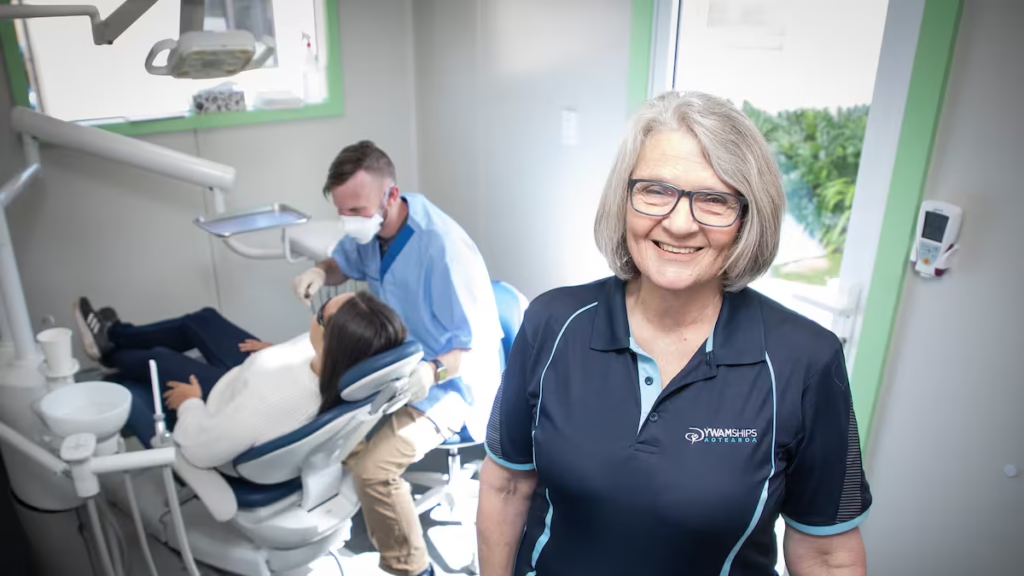
This was a slow, trust-based process. It began with the company’s representatives spending time on the Marae, listening to concerns and learning about Tikanga without any commercial agenda. A co-design working group of elders, health workers, and our consultants was established to guide every decision. A pilot clinic was set up in a modified portable cabin on the Marae grounds. Feedback was continuously gathered and the model was refined over several months before considering a permanent facility.
Results and Impact
The most significant result was a 40% increase in dental service utilization by the community members within the first year. Qualitative feedback highlighted that patients felt “safe,” “heard,” and “respected.” The community developed a sense of ownership over the service, which became a source of pride. The model also contributed to the preservation of cultural knowledge, as younger Kaimahi were trained in both traditional practices and modern dental support. The “Whare Niho” model is now being documented as a best-practice case study for indigenous health in New Zealand.
Conclusion
This initiative demonstrated that achieving health equity for indigenous populations requires more than just providing clinical services; it requires a fundamental respect for culture. By humbly partnering with the Māori community to co-create a service that reflected their values, we helped bridge a deep-seated cultural divide, turning a place of treatment into a place of trust and community well-being.