

For procedures demanding efficient, controlled cutting of dentin, metal, acrylic, or composite, tungsten carbide burs offer a unique combination of durability, sharpness, and versatility that diamond or steel burs cannot match. A comprehensive set encompassing both FG (Friction Grip) and RA (Right Angle/Latch) shank tungsten carbide burs equips the clinician for a wide spectrum of high- and low-speed applications in restorative, prosthetic, and surgical dentistry.
These burs are fabricated through a powder metallurgy process, sintering microscopic tungsten carbide particles within a cobalt binder to form an incredibly hard, wear-resistant, yet less brittle solid than diamond. Their cutting action comes from precisely machined flutes (blades). Cross-cut flutes feature microscopic notches that segment the cutting edge, preventing the bur from “grabbing” or binding in ductile materials like dentin or acrylic, allowing for aggressive yet controlled removal. Plain fissure flutes provide a smoother, planing action ideal for finishing. The variety of head shapes is extensive: Round burs for caries excavation and access openings; inverted cones for creating undercuts and amalgam box forms; straight fissures for axial wall preparation; pear-shaped burs for occlusal carving and cavity refinement; and specialized designs like Endo-Z burs for non-perforating endodontic access.
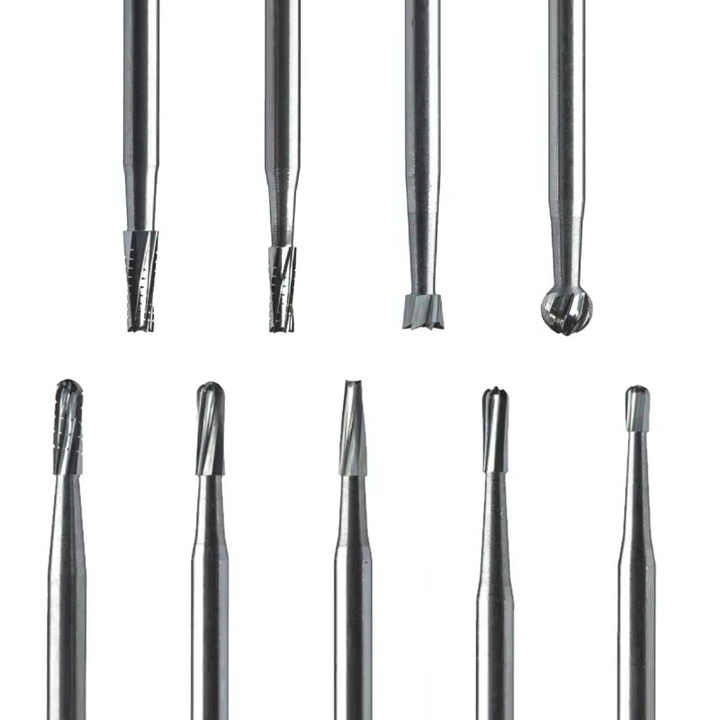
Their clinical applications are broad. In the high-speed handpiece, they are the instrument of choice for efficient dentin preparation, removal of old amalgam or metal crowns, and sectioning teeth for extraction. Their sharp flutes cut coolly and efficiently. In the low-speed handpiece (using RA latch or contra-angle attachments), they become indispensable for precision work: trimming and adjusting chrome-cobalt partial denture frameworks, finishing acrylic temporary restorations, refining composite margins, and removing orthodontic cement. The RA shank variants are particularly crucial for laboratory handpieces. By having an organized set of these robust burs, the clinician is prepared for any demanding cutting task that requires a blend of high efficiency, excellent control, and the ability to withstand significant lateral forces without fracture.