
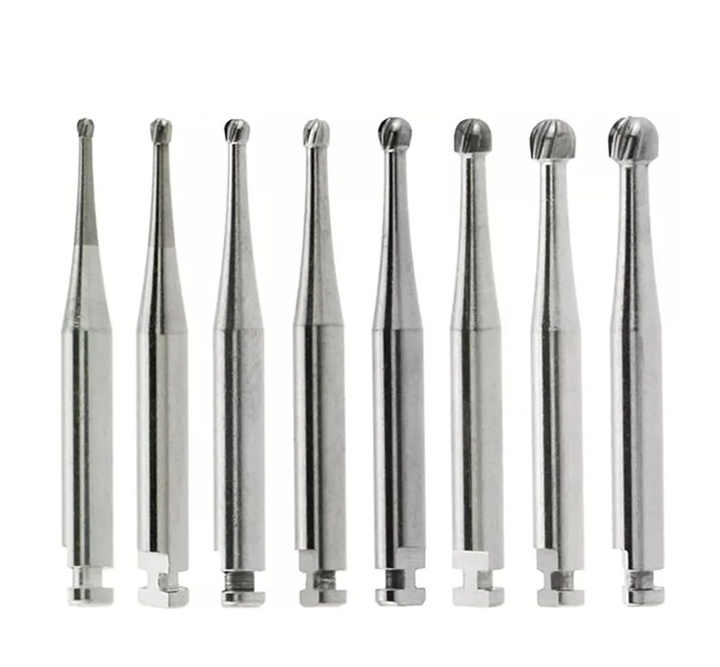
Selecting the correct rotary instrument is fundamental to efficient, precise, and biologically sound tooth preparation. The three primary families—steel, diamond, and tungsten carbide burs—each possess distinct metallurgic properties and clinical indications. Understanding this “cutting matrix” allows the clinician to strategically match the instrument to the material and task.
1. Steel Burs: Fabricated from hardened stainless steel, these are the most economical but have limited use in contemporary high-speed restorative dentistry. Their machined flutes become dull rapidly when cutting enamel or modern ceramics, generating excessive heat. Their primary role is now in low-speed applications: fine trimming and adjusting acrylic provisional crowns, smoothing denture bases, and selectively removing soft carious dentin with tactile feedback. They are contraindicated for high-speed enamel preparation.
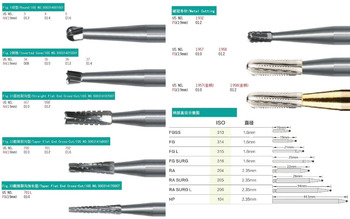
2. Diamond Burs: These consist of a metal shank coated with a layer of industrial diamond particles secured in a metallic matrix. They are the undisputed workhorses for cutting brittle, hard tissues and materials. The abrasive action of thousands of diamond points makes them exceptionally effective for:
* Enamel reduction for crown preparations.
* Rapid bulk removal of tooth structure.
* Cutting, adjusting, and finishing ceramic, porcelain, and zirconia restorations.
* Finishing preparation margins to a smooth line.
Grit size (coarse to super-fine) is selected based on the need for speed versus surface finish.
3. Tungsten Carbide Burs: Made from a solid, sintered composite of tungsten carbide and cobalt, these burs offer exceptional hardness and sharpness from their precision-cut flutes. They are designed for efficient cutting of ductile or fibrous materials. Key applications include:
* High-speed preparation of dentin (superior efficiency and cooler cutting than diamonds).
* Removal of old amalgam, metal crowns, or composite.
* Sectioning teeth for extractions.
* In low-speed, for trimming metal alloy frameworks and finishing composite margins.
A strategically stocked and organized collection of all three types ensures the clinician can perform every cutting task with maximal efficiency, minimal trauma to the tooth, and optimal surface preparation for bonding or impression-taking, directly contributing to superior clinical outcomes.