
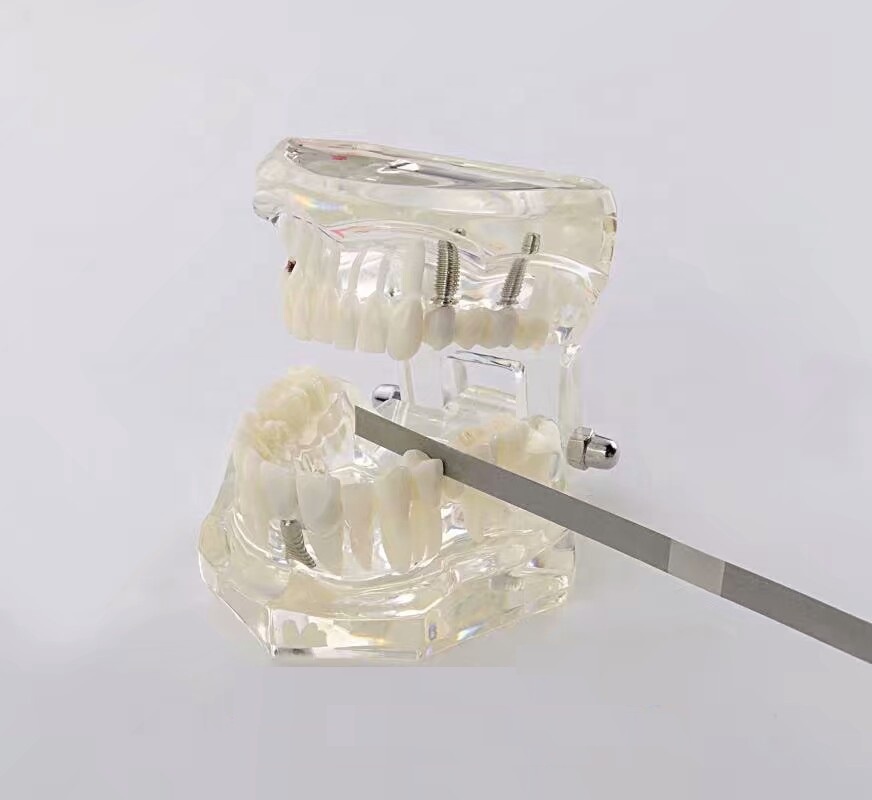
Dental Interproximal Reduction (IPR) Diamond Strips are precision abrasive tools used by orthodontists and dentists to safely and selectively remove small amounts of enamel from the proximal surfaces of teeth. This creates space for tooth alignment during orthodontic treatment.
Technical Specifications & Material Science: The strip consists of a flexible, thin metal or plastic backing coated on one or both sides with fine-grit diamond particles (e.g., 15µm, 30µm) bonded with a nickel or resin matrix. They are available as single-sided (abrasive on one side) or double-sided (abrasive on both), and in various widths and thicknesses to fit different interdental spaces. The grit size determines the aggressiveness of enamel removal and the final surface finish. Higher grit numbers produce a smoother finish.
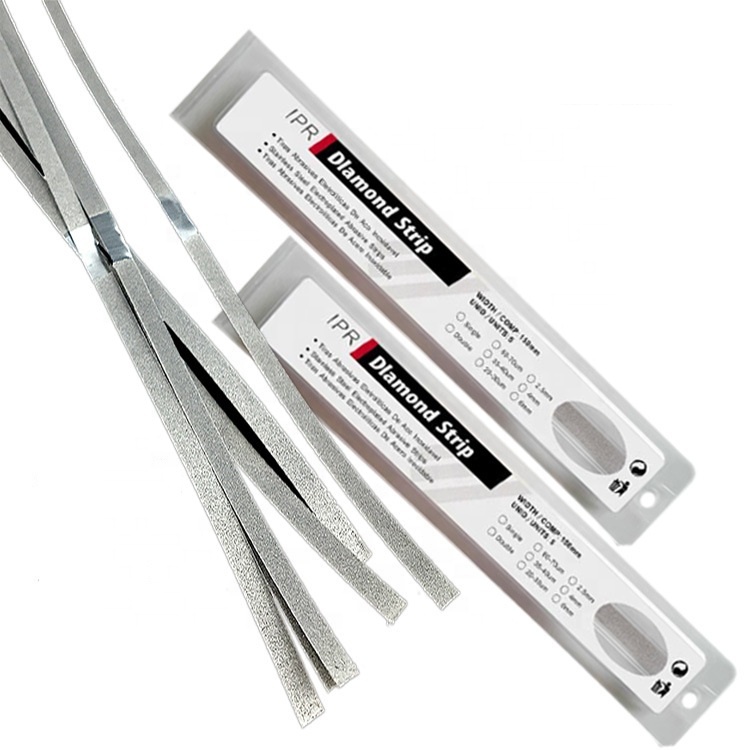
Industry Standards & Compliance: Class I medical device. The diamond abrasive is a standard, safe material for intraoral enamel reduction.
Application Scenarios: A core tool in orthodontic treatment to resolve mild to moderate crowding without tooth extraction. Also used in restorative dentistry to create space for restorative materials (e.g., when placing a small Class III composite) or to reshape tooth contours.
Usage Guidelines: Select the appropriate strip width and grit. Use a protective metal strip holder or grip for control. Insert the strip into the interdental contact area and move it back-and-forth in a sawing motion with constant water spray to cool the tooth and flush away debris. The amount of reduction is carefully measured (often with a calibrated gauge) to stay within safe biological limits (typically 0.1-0.5mm per surface). Strips are single-use per patient to prevent cross-contamination and ensure sharpness.
Market Value Proposition: For orthodontic suppliers, IPR strips are a specialized, high-demand consumable. Offering them in a variety pack (single/double-sided, multiple grits) provides the clinician with the right tool for every case. Their role in facilitating non-extraction orthodontics makes them a critical product for modern orthodontic practices.