
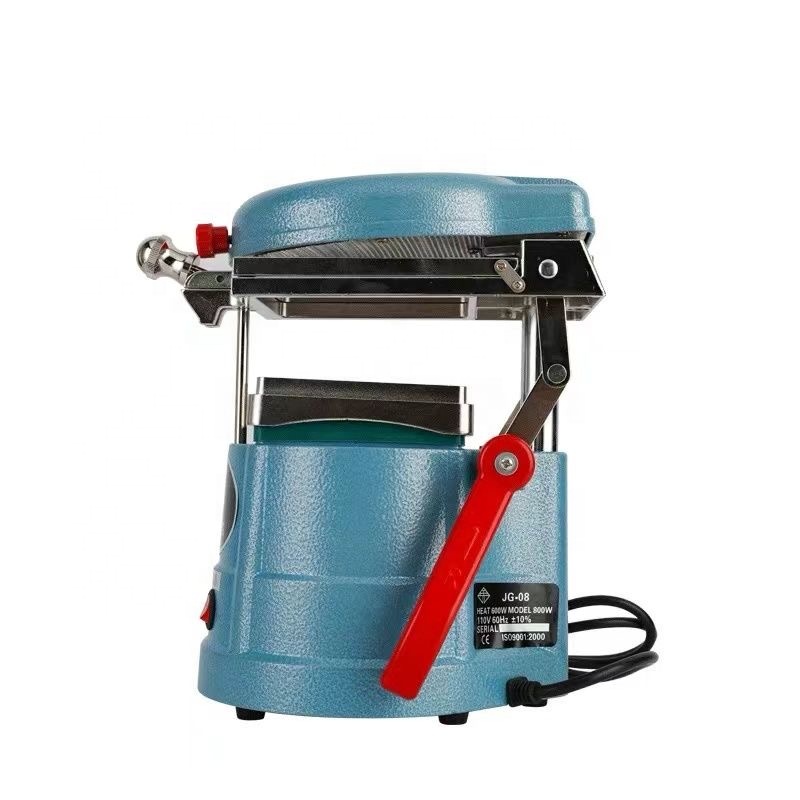
The fabrication of accurate, patient-specific dental devices often relies on the transformative process of vacuum forming. A dental laboratory laminator or tabletop vacuum former is a fundamental yet sophisticated piece of equipment that bridges digital designs and physical models, creating a vast array of essential orthodontic and restorative appliances through precise thermoplastic adaptation.
The technical process is a carefully controlled sequence. A sheet of specialized thermoplastic material—such as PET-G for durable retainers, EVA for soft mouthguards, or polycarbonate for temporary splints—is securely clamped in a frame. An integrated heating element, often ceramic for even heat distribution, brings the sheet to its specific forming temperature, at which it becomes a pliable, sagging membrane. Simultaneously, a detailed dental stone or 3D-printed model is positioned on the machine’s platen. At the optimal moment, the heated sheet is automatically or manually lowered over the model. A powerful, instantaneous vacuum is activated, evacuating all air from the space between the plastic and the model. Atmospheric pressure (14.7 psi) then forces the softened plastic to undergo dramatic, intimate adaptation, conforming to every undercut, cusp tip, and gingival contour with remarkable fidelity. Upon cooling, the plastic re-solidifies into a rigid, dimensionally stable shell that is a negative replica of the positive model.
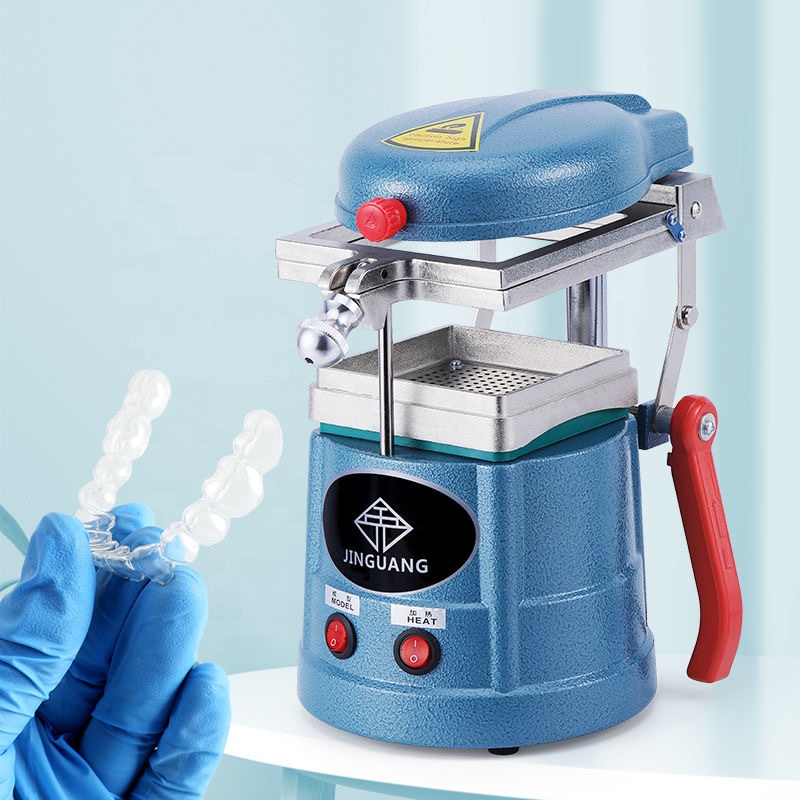
The applications are extensive and critical to daily practice. In orthodontics, it produces clear retainers, positioners, and aligner models. In restorative and general dentistry, it is indispensable for fabricating custom whitening trays that ensure gel contact and prevent gingival irritation, precise provisional crown forms, and accurate custom impression trays that enhance final restoration fit. The precision afforded by a reliable vacuum former directly dictates appliance performance: a well-fitting night guard ensures effective occlusal protection, and an accurate surgical guide guarantees precise implant placement. Mastery of this technology is therefore a core competency in any dental laboratory, forming the physical foundation upon which successful treatment outcomes are built.