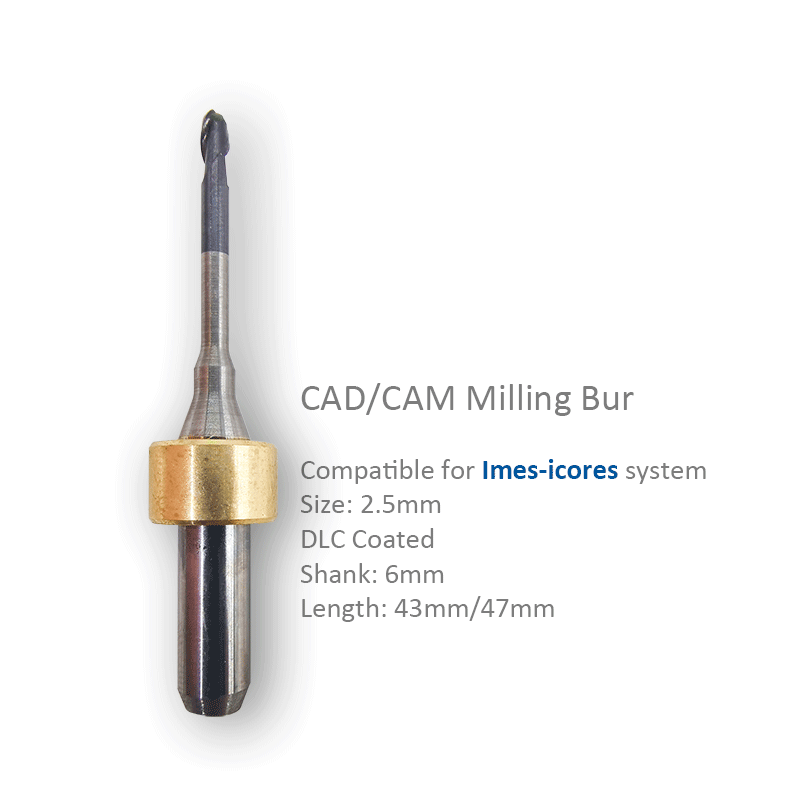
The digital dental workflow culminates in the physical milling of a restoration from a blank, a subtractive process entirely dependent on the performance of specialized CAD/CAM milling burs. These instruments are engineered to machine ultra-dense, modern dental materials—primarily zirconia, lithium disilicate, polymer-infiltrated ceramics, and composite blocks—with sub-micron accuracy, directly determining the marginal fit, occlusal anatomy, and surface integrity of the final prosthesis.
Unlike intraoral burs, CAD/CAM burs are designed for the high-torque, multi-axis spindles of milling machines. To withstand the abrasive nature of pre-sintered zirconia, the most common substrate is an ultra-fine grain tungsten carbide blank, upon which a monolayer of premium, sharp diamond particles is permanently bonded. This construction provides the necessary hardness and wear resistance. Bur geometry is highly specialized: Cylindrical burs with flat or rounded ends are used for roughing and finishing axial walls; tapered burs access narrow preparation margins and create precise emergence profiles; ball-nose burs generate smooth, anatomical occlusal surfaces and concave fossae. A strategic milling sequence employs progressively finer grit burs—from coarse (e.g., 180-250µm grit) for rapid blank reduction to extra-fine (e.g., 15-30µm grit) for final surface polishing—to efficiently remove material while minimizing tool pressure and vibration (“chatter”).
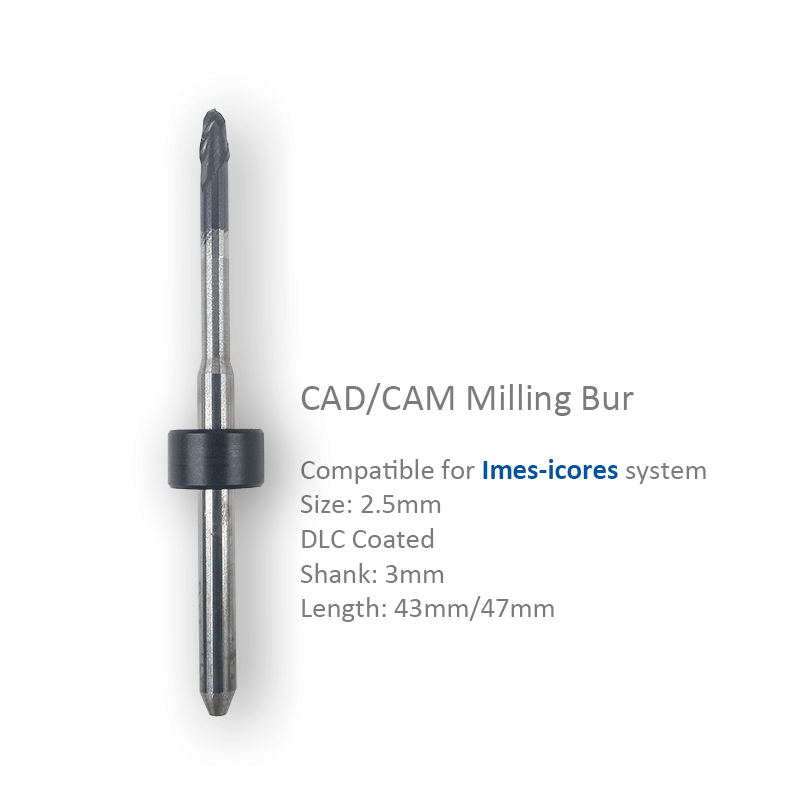
The consequences of using worn or inappropriate burs are significant. They can introduce microscopic cracks into the material, produce a roughened surface that requires excessive manual polishing (altering dimensions), or cause inaccurate milling leading to poor marginal fit. Therefore, rigorous bur management is a cornerstone of the digital lab. This includes adhering to manufacturer-recommended lifespans (often quantified in milling minutes or material volume), implementing a strict bur tracking log, using dedicated burs for specific material groups to prevent cross-contamination (e.g., separate burs for zirconia and PMMA), and employing automated or ultrasonic cleaning protocols after each use. Investing in high-performance, system-specific CAD/CAM burs is not an operational expense but a direct investment in the precision and profitability of the digital workflow, ensuring the virtual design is flawlessly translated into a clinically superior restoration.