
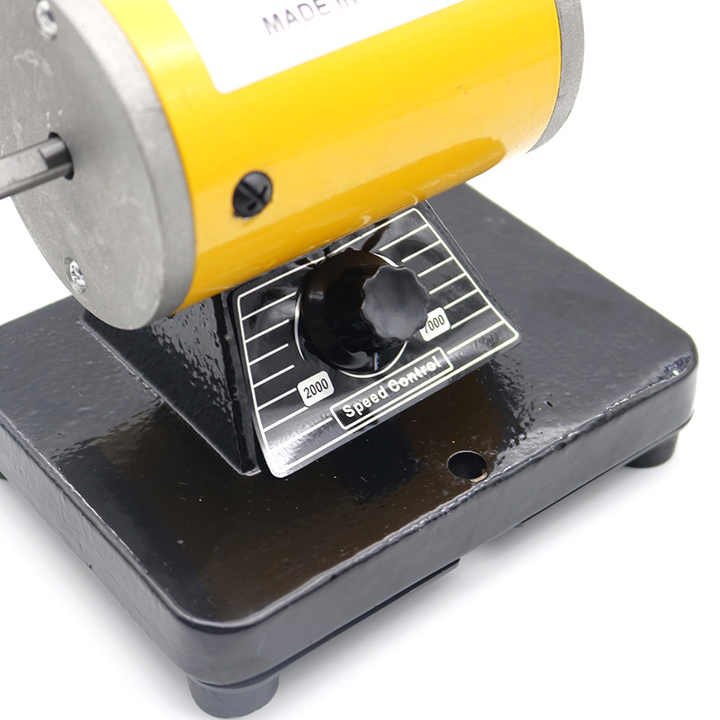
The Professional High-Speed Polishing Machine (35,000 RPM) is a versatile, compact handpiece system used in both dental laboratories and nail salons. In dentistry, it serves as a high-speed, precision tool for detailed polishing, engraving, and carving on a micro-scale.
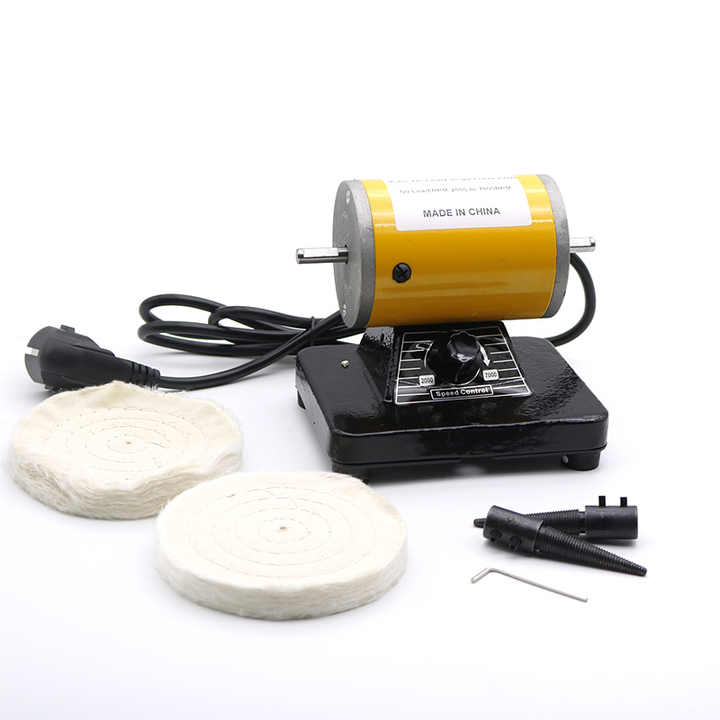
Technical Specifications & Material Science: The core is a pencil-grip micromotor handpiece driven by a brushless DC motor capable of speeds up to 35,000 RPM. It features variable speed control via a foot pedal or dial, allowing for precise torque management. The handpiece accepts a wide range of small-shank (e.g., 2.35mm/3mm) burs and polishing points. It is typically part of a stationary bench unit that includes the control box, foot pedal, and a flexible arm to support the handpiece cord. The system is designed for low-torque, high-speed work, making it unsuitable for heavy grinding.
Industry Standards & Compliance: A Class I electrical device requiring standard safety certifications (CE, UL). As a lab tool, it doesn’t have the same fluid ingress protection as an intraoral handpiece.
Application Scenarios (Dental Lab):
- Precision polishing of intricate details on acrylic denture teeth or small clasps.
- Engraving identification marks on prostheses.
- Carving and detailing wax patterns for casting.
- Polishing in hard-to-reach areas of small frameworks.
- Finishing 3D-printed resin models and guides.
Usage Guidelines: Select a fine-grit diamond point, rubber wheel, or felt wheel appropriate for the task. Use the foot pedal to control speed, starting slow and increasing as needed. Use very light pressure due to the high speed. The handpiece is not autoclavable but can be wiped down with disinfectant; burs are sterilizable.
Market Value Proposition: This tool fills the gap between a slow lathe and a heavy-duty grinder. It offers unmatched detail work capability. For a dental supplier, marketing this to labs highlights its utility for jewelry-like precision on dental appliances. Its dual-use nature (dental/nail) can also be a marketing angle for certain distributors, though the dental-specific value should be emphasized for professional labs.