
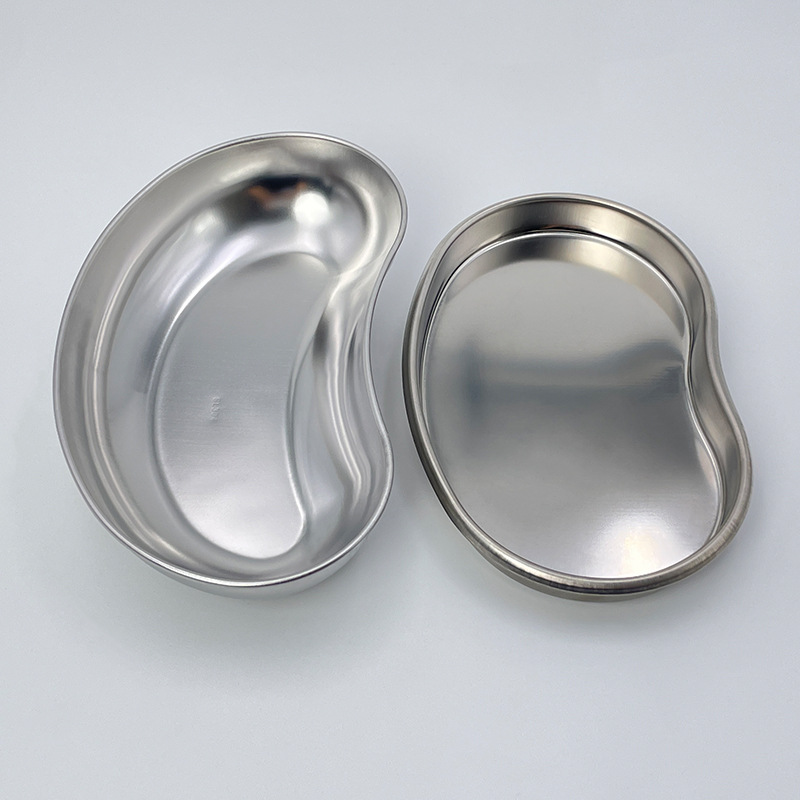
The Stainless Steel Kidney Tray is a versatile and essential organizational tool in the medical and dental instrument reprocessing cycle. Its classic kidney shape maximizes space efficiency while its durable construction withstands the harsh conditions of cleaning, disinfection, and sterilization processes.
Technical Specifications & Material Science: Fabricated from Grade 304 or 316 Austenitic Stainless Steel, chosen for its superior corrosion resistance, non-magnetic properties, and ease of cleaning. The trays are formed through a process of stamping and welding, with edges rolled or finished to be smooth and burr-free. The classic kidney (reniform) shape allows it to fit snugly against the body during procedures if used as a procedural tray, but its primary function is in sterilization. They come in various sizes and depths, with some models featuring perforations to facilitate drainage and steam penetration during autoclaving.

Industry Standards & Compliance: The material meets ASTM A967 or similar standards for passivation, which enhances the chromium oxide layer for stain resistance. Manufacturing occurs in a GMP-compliant environment.
Application Scenarios:
- Instrument Soaking & Ultrasonic Cleaning: Holding instruments in enzymatic or disinfectant solutions.
- Rinsing & Drying Station.
- Autoclave Sterilization: Perforated trays are ideal for steam sterilization cycles.
- Organizing Instruments on the bench during set-up or procedures.
- Central Sterile Supply Department (CSSD) workflow organization.
Usage Guidelines: After use, contaminated instruments can be placed directly into the tray for transport to the decontamination area. The tray itself must be cleaned and disinfected after each use. Perforated trays should be used in autoclaves to allow steam contact on all surfaces. Regular inspection for signs of pitting corrosion or damage is recommended.
Market Value Proposition: This product is a fundamental, durable infrastructure item for any clinical setting. Its longevity (often 10+ years with proper care) makes it a highly cost-effective purchase. It promotes infection control best practices by providing a dedicated, cleanable container for instruments at every stage of reprocessing, reducing the risk of cross-contamination. For suppliers to clinics and hospitals, kidney trays are a staple, repeat-order item for new setups, expansions, or replacements, representing a stable and reliable product line.