
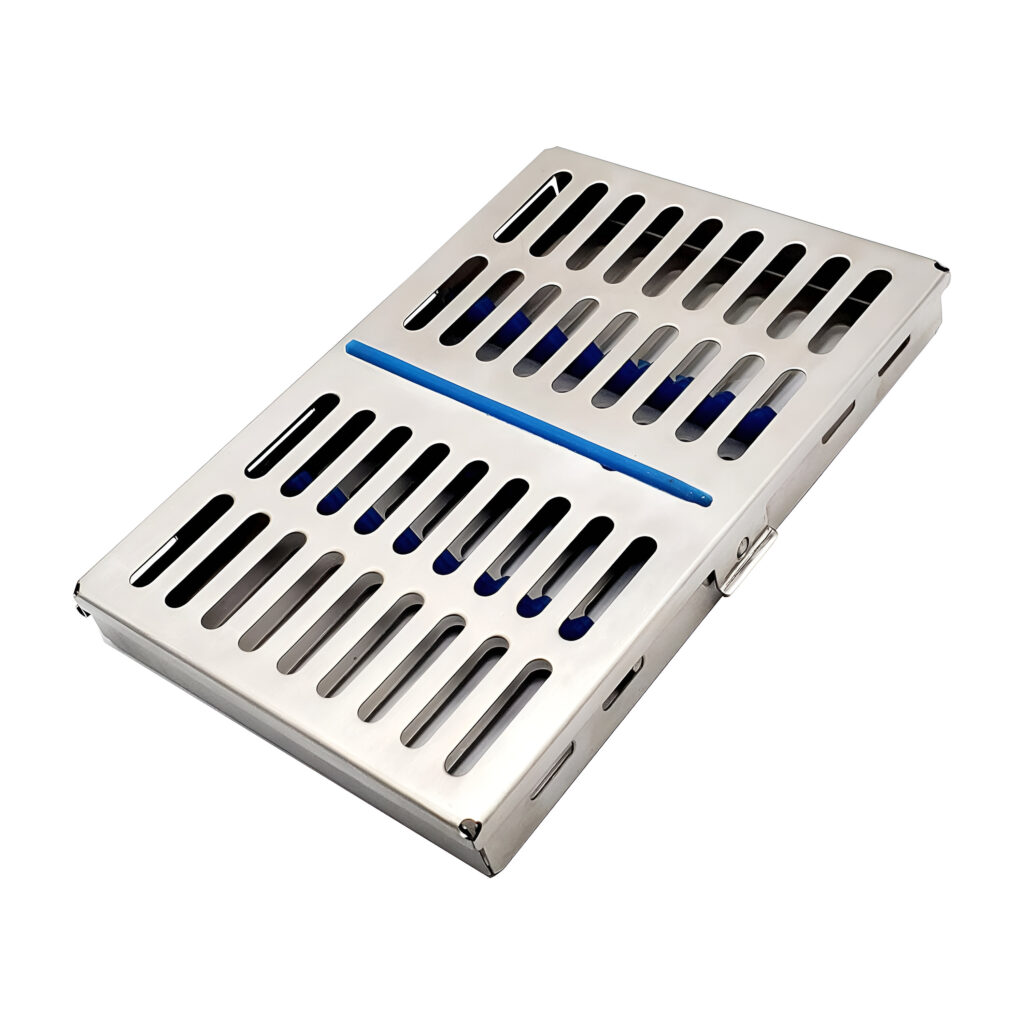
The Sterilization Cassette Box is a systematic instrument management system designed to keep specific sets of tools together throughout the entire cycle of use, cleaning, sterilization, storage, and back to use. It enhances efficiency, protects valuable instruments, and enforces infection control protocols.
Technical Specifications & Material Science: The cassette is constructed from perforated, surgical-grade 304 stainless steel. The perforations (typically 3mm diameter) are crucial for allowing steam, heat, and chemical vapors to penetrate during sterilization, and for facilitating drainage during cleaning. The box consists of a hinged lid and a base with instrument-specific recesses or a matrix design. A secure latch or clasp keeps it closed during handling. Internal instrument separators prevent metal-to-metal contact, reducing the risk of damage (chipping of cutting edges) and ensuring even sterilization. Common sizes hold 5, 10, or 15 instruments.
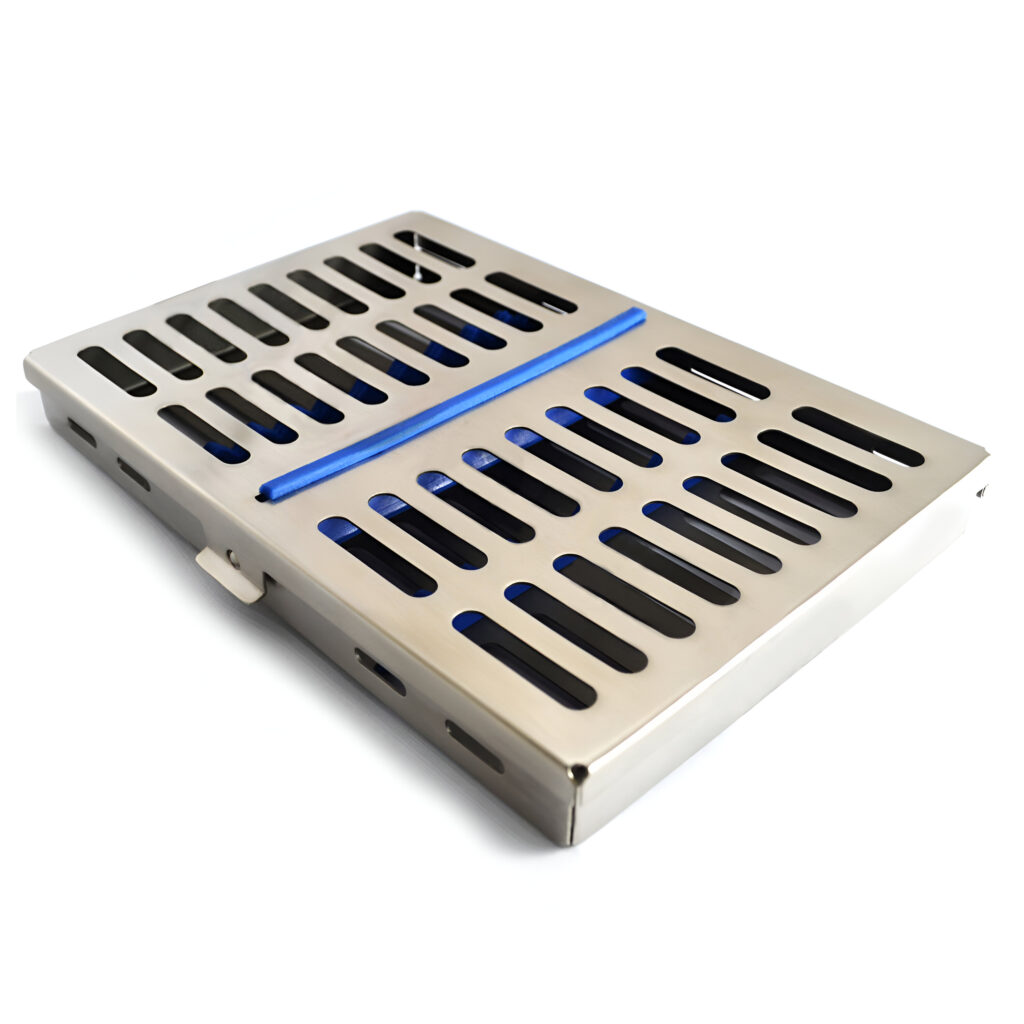
Industry Standards & Compliance: Manufactured to meet the requirements of ANSI/AAMI ST79 for medical device sterilization. The materials and design are validated for use in steam autoclaves (up to 135°C) and chemical vapor sterilizers.
Application Scenarios:
- Dental Procedure Sets: e.g., Basic Examination Kit, Scaling/Prophy Set, Composite Restorative Set, Surgical Extraction Set.
- Minor Surgical Sets in clinics and outpatient surgery centers.
- Specialist Instrument Sets for periodontics or endodontics.
Usage Guidelines: After a procedure, the entire set of soiled instruments is placed back into their designated spots in the open cassette. The closed cassette is then placed in an ultrasonic cleaner, rinsed, dried, and placed directly into the autoclave. Once sterilized and cooled, the cassette can be stored as a sealed unit until the next procedure, where it is opened aseptically at the chairside.
Market Value Proposition: This system transforms instrument logistics. It dramatically reduces instrument loss and damage, protecting a significant capital investment. It saves valuable staff time by eliminating the sorting and counting of loose instruments. Most importantly, it standardizes and enforces infection control, as instruments are handled as a set and cannot be used unless the entire cassette has been processed. For distributors, it represents a high-value sale that improves clinic operations, with potential follow-up sales for different cassette configurations.