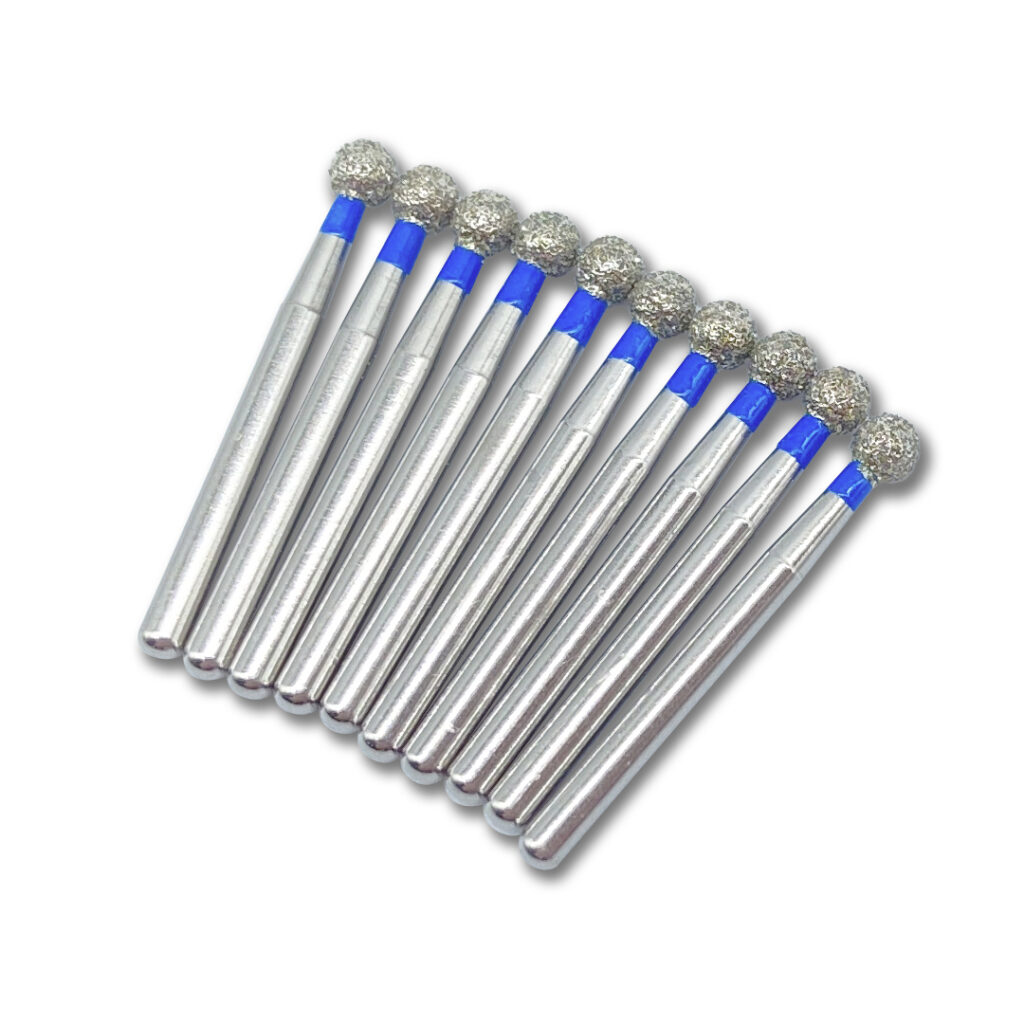
Tooth preparation is a subtractive sculpting process that demands absolute precision, and the quality of the cutting instrument is paramount. A comprehensive set of high-speed dental diamond burs, such as a 30-piece assortment in an organized disinfection block, constitutes the core restorative toolkit, enabling efficient, controlled, and cool cutting of tooth structure and modern restorative materials.
Modern diamond burs are masterpieces of abrasive technology. A solid carbide or stainless steel shank is coated with a layer of natural or synthetic industrial diamond particles, securely bonded via a metallic (nickel or chromium) matrix. The performance is defined by grit size (coarse: 100-150µm for rapid reduction; medium: 40-75µm for initial shaping; fine: 10-30µm for finishing; extra-fine: 4-8µm for super-smooth surfaces), particle concentration, and bur head geometry (rounded, tapered flat-end, flame, torpedo). Coarse-grit, cross-cut burs are designed for bulk removal and crown sectioning, while fine-grit, non-crosscut burs are ideal for bevel placement, margin refinement, and enameloplasty.
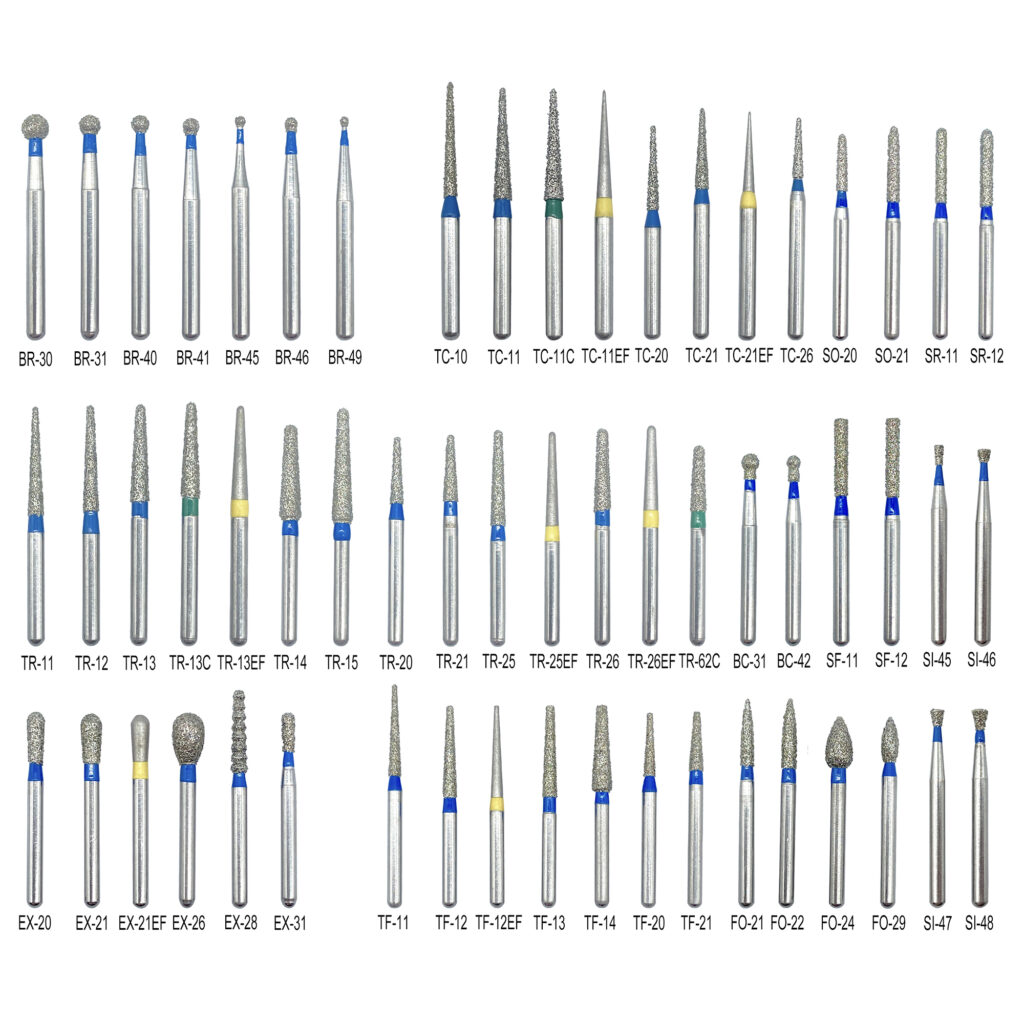
The accompanying aluminum disinfection block is a critical component for infection control and instrument management. It allows the entire set—or a procedure-specific selection—to be safely transported, ultrasonically cleaned, disinfected, and autoclaved as a single unit. This organized system protects the delicate cutting edges from damage caused by loose storage, ensures a sterile bur is always available, and streamlines the setup process. Using sharp, appropriate burs with copious water spray is essential to minimize heat generation and prevent iatrogenic pulp damage. Investing in a high-quality, varied set is a direct investment in clinical efficiency, preparation quality, and ultimately, the success and longevity of the final restoration.